
Tank-to-tankless conversions
Removing the old tank, mounting the new unit, and updating gas, venting, water and condensate lines as needed.
Tired of running out of hot water? Find out whether tankless suits your home before you spend on the switch.
Call (520) 000-0000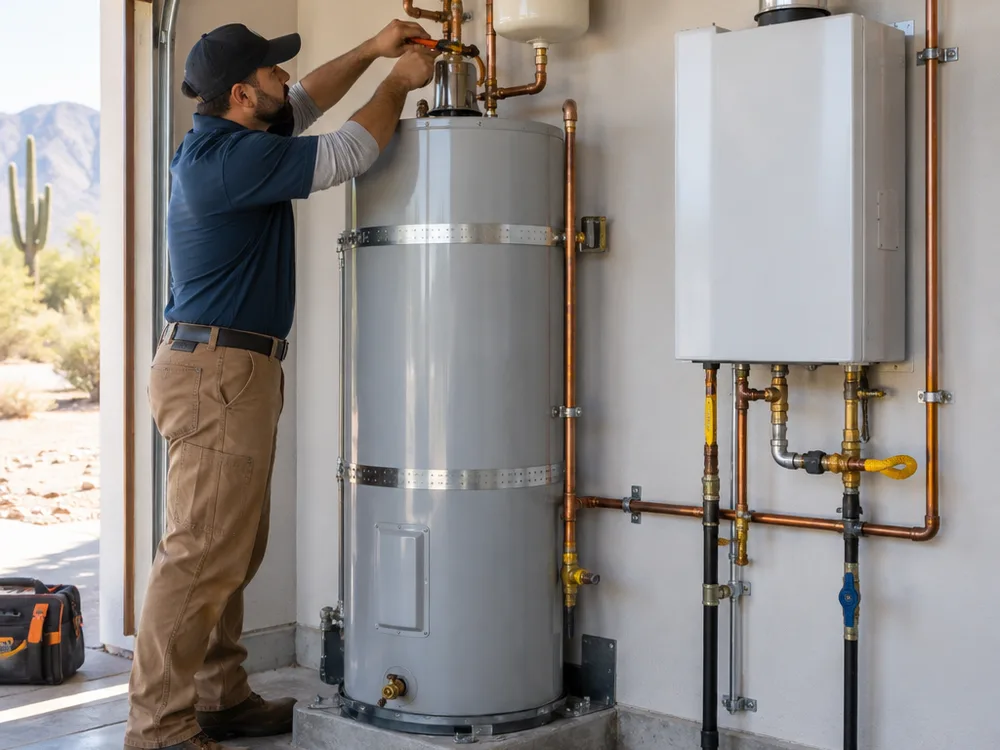
A tankless heater warms water only when you open a tap, so it doesn't run out the way a tank does. It's a good fit for some homes and a poor one for others.
Not sure tankless is worth it? Compare it with a standard Tucson water heater replacement before you decide.
Tankless units are sized by flow rate (how many gallons per minute they can heat) and by temperature rise (how much warmer they need to make the incoming water).
Incoming water is warmer in summer than in winter, so a unit that keeps up in July may struggle on a cold January morning. We size for the colder months and for the fixtures you actually run at the same time.
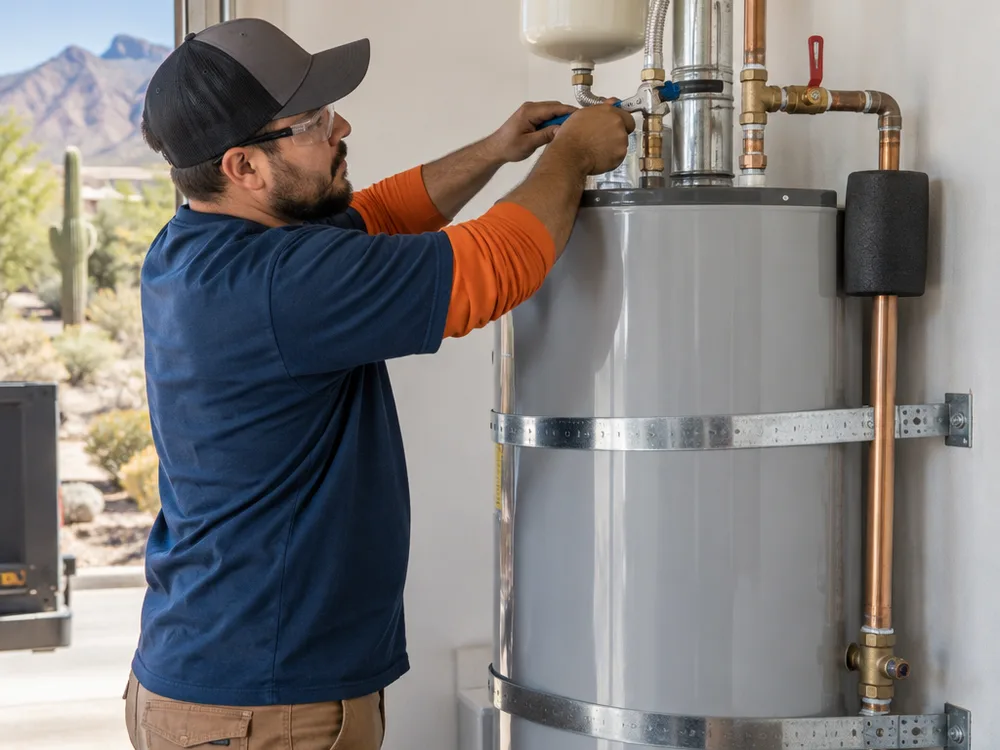
We handle the full life of a tankless system, from the first fit check to yearly upkeep.
Removing the old tank, mounting the new unit, and updating gas, venting, water and condensate lines as needed.
For new builds, additions and remodels, sized to the fixtures the space will serve.
Flushing the heat exchanger and cleaning the inlet filter to keep scale from cutting output.
Error codes, ignition and flame faults, flow sensor problems and venting issues, diagnosed before any part is replaced.
A gas tankless unit can use several times the gas of a tank at full fire. Many homes need a larger gas line from the meter, and some need a meter upgrade from the gas company.
Venting changes too. Many tankless units use dedicated vent pipe rather than the old tank's flue, and condensing models need a drain for condensate. Electric tankless units need large dedicated circuits, which some electrical panels can't support. We check all of this before quoting.
Scale is the main enemy of a tankless heater. Minerals build up in the heat exchanger, reduce output and can trigger error codes. Regular flushing, commonly about once a year, keeps it running well.
We also clean the inlet water filter, check the venting and combustion, and look at the condensate line on condensing units.
A tankless install usually costs more than a tank swap, mainly because of gas line, venting and mounting work. The exact cost depends on the unit, how far it is from the gas meter, and the vent route. We confirm the price after an on-site look.
We install and service tankless units across the city and nearby towns, including Oro Valley, Sahuarita and Vail.
It can be, if you want hot water that doesn't run out and your home can support the gas line and venting. Upfront cost is higher, so it pays off best for households that use a lot of hot water and plan to stay a while.
Often. Gas tankless units need far more gas at full fire than a typical tank, so many homes need a larger line from the meter. We check the line size and meter before quoting.
Follow the manufacturer's schedule, which is commonly about once a year. Hard water builds scale faster, so homes with harder water may need it more often.
Common causes are scale buildup, ignition or flame problems, venting issues, or low gas pressure. The code points us in a direction, but we confirm with testing before replacing parts.
Some models are rated for outdoor mounting. They need freeze protection for cold nights and a spot that meets the clearance rules. We'll tell you whether your model and location work.
Tell us about your home and how you use hot water. We'll tell you honestly whether tankless makes sense.
Call (520) 000-0000