
No hot water, or not enough
Often a failed element, a thermostat fault or a gas control or pilot problem. We test the parts, confirm power or gas supply, and check recovery after the repair.
No hot water, a leak, or a pilot that won't stay lit? Get a clear diagnosis and price before any repair starts.
Call (520) 000-0000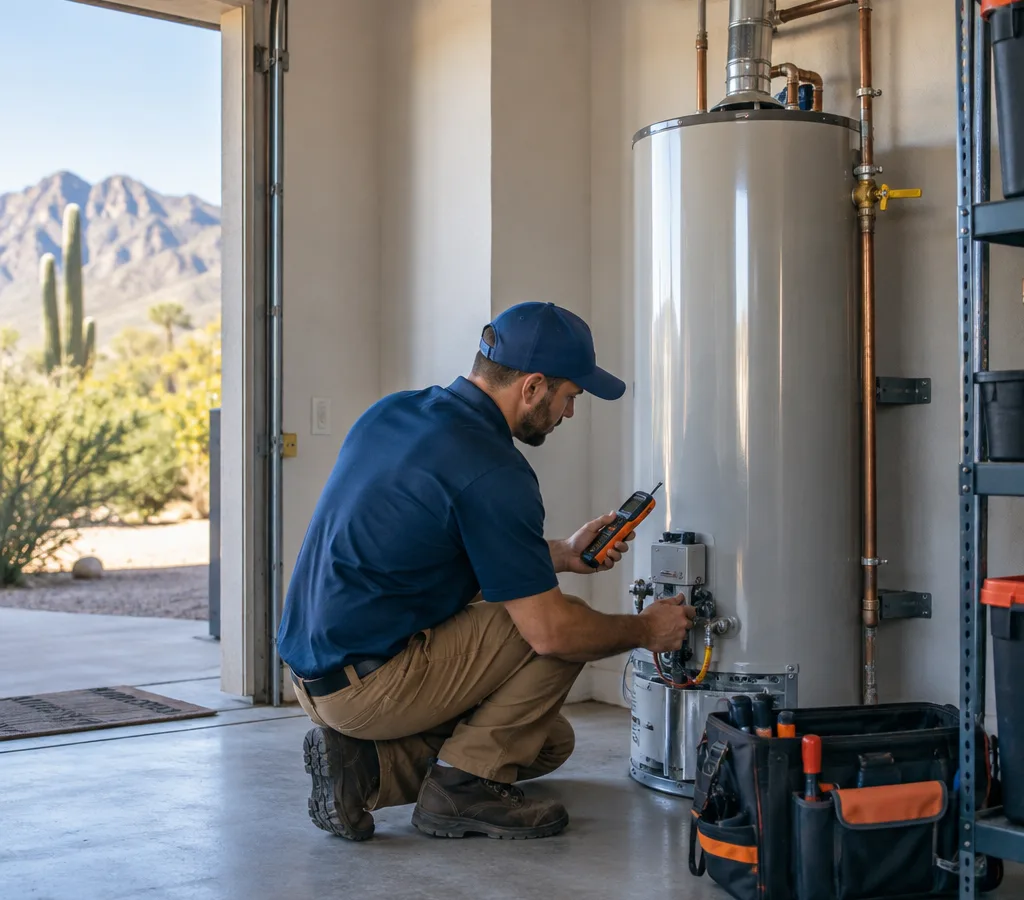
Hot water rarely quits at a convenient time. We work on the parts that fail most often: heating elements, thermostats, gas control valves, pilot assemblies, relief valves, dip tubes, and venting or combustion air problems.
Most heaters we see are tank units in a garage or an indoor closet. You'll get a plain explanation of what failed, what it takes to fix it, and whether the repair is worth it on a heater of that age.
When the tank itself has failed, repair stops making sense. That's when we talk you through a full swap instead (see water heater replacement Tucson for how that works).
Often a failed element, a thermostat fault or a gas control or pilot problem. We test the parts, confirm power or gas supply, and check recovery after the repair.
A stuck thermostat, a wrong setting or sediment around the sensor. We correct the setting and replace controls when testing shows they're out of spec.
A loose connection or leaking valve can often be fixed; a tank seam leak usually can't. We trace the source and tell you which one you have.
We check the thermocouple or thermopile, gas valve, combustion air and venting. Safety checks come first on every gas unit.
Sediment can insulate the burner or elements and cause overheating noises. Flushing may help; heavy scaling can point to a worn tank.
We check the anode rod and look for tank corrosion. Sometimes a targeted repair adds years; sometimes it's a warning that the tank is near the end.
A good repair starts with confirming the failure, not guessing. We begin with the basics: shutoff valves, visible leaks, venting on gas units, and whether the heater is firing or drawing power.
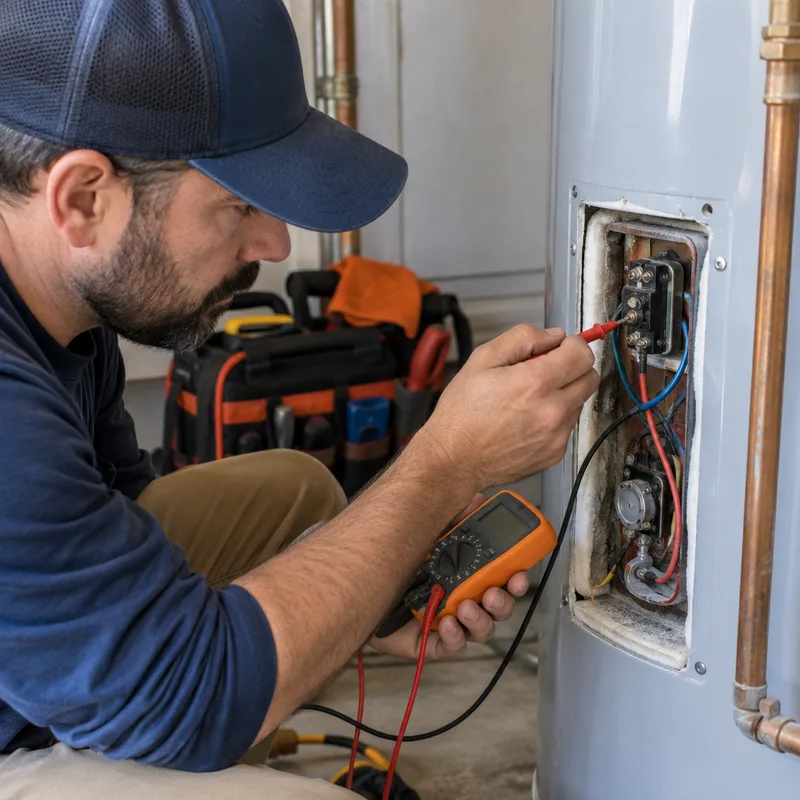
On electric heaters we check voltage at the unit, test element resistance and confirm the thermostats. On gas heaters we check pilot ignition, flame, gas valve function, and signs of backdrafting or poor combustion air.
Access matters too. Tight closets, attic vent runs and crowded garages all affect time and safety, so we note them before quoting. You'll get a written scope and clear options before anything is replaced.
Most repairs run about $175 to $650, depending on whether it's a minor valve or thermostat fix or a larger control or electrical repair.
A simple diagnosis and adjustment sits at the low end; replacing a gas control valve or several electric parts lands higher. Your final price depends on the heater type, age and condition, part availability, access, and whether leak damage complicates the work. We confirm the exact cost after testing.
We look for active leaks, confirm the shutoffs work, and test the heater's core functions: power, ignition, temperature control and venting.
You get a direct explanation of what failed and the repairs that fit the heater's condition, including when replacement is the better spend.
After you approve, we make the repair, restore operation, and check temperature and recovery. On gas units we confirm a stable burner and safe venting.
We leave the area clean and share next steps, like checking the relief valve line and watching for early signs of tank failure.
We repair water heaters across the city and in nearby towns, including Oro Valley, Marana, Sahuarita, Green Valley and Vail.
Yes. The checks differ by fuel type, so we test the actual parts (elements and thermostats on electric units, ignition and gas controls on gas units) before recommending a fix.
A leak from a fitting, valve or the relief valve piping can often be repaired. A leak from the tank body usually means replacement. Condensation and nearby plumbing leaks can look like a failed tank, so we find the source first.
Often, yes. The fastest fixes happen when the heater is easy to reach and the part is a common one. We still confirm the failure by testing before any repair is approved.
Usually sediment at the bottom of the tank trapping heat. A flush may quiet it, but if the tank is heavily scaled or corroding, the noise can be an early sign it's nearing the end of its life.
Many homes use about 120°F as a balance between comfort and scald risk. If you're running out of hot water, turning it up isn't always the answer; a failing thermostat, element or dip tube can cause the same symptom.
We weigh the type of failure, the heater's age and condition, and any signs of tank damage. One worn part on a sound tank is usually worth fixing; a failing tank or several worn parts usually isn't.
Tell us what the heater is doing (no hot water, a leak, pilot trouble or odd noises) and we'll set up a diagnostic visit.
Call (520) 000-0000